A Study On The Effects Of Cavitation And Orifice Geometry On Liquid Jets In Crossflow Using Laser Diagnostics
T. Wang(1), K. Rajamanickam(2), Y. Hardalupas(1)
1: Imperial College London, Mechanical Engineering Department, London SW7 2AZ, UK
2: School of Engineering, University of Manchester, Manchester, UK
DOI:
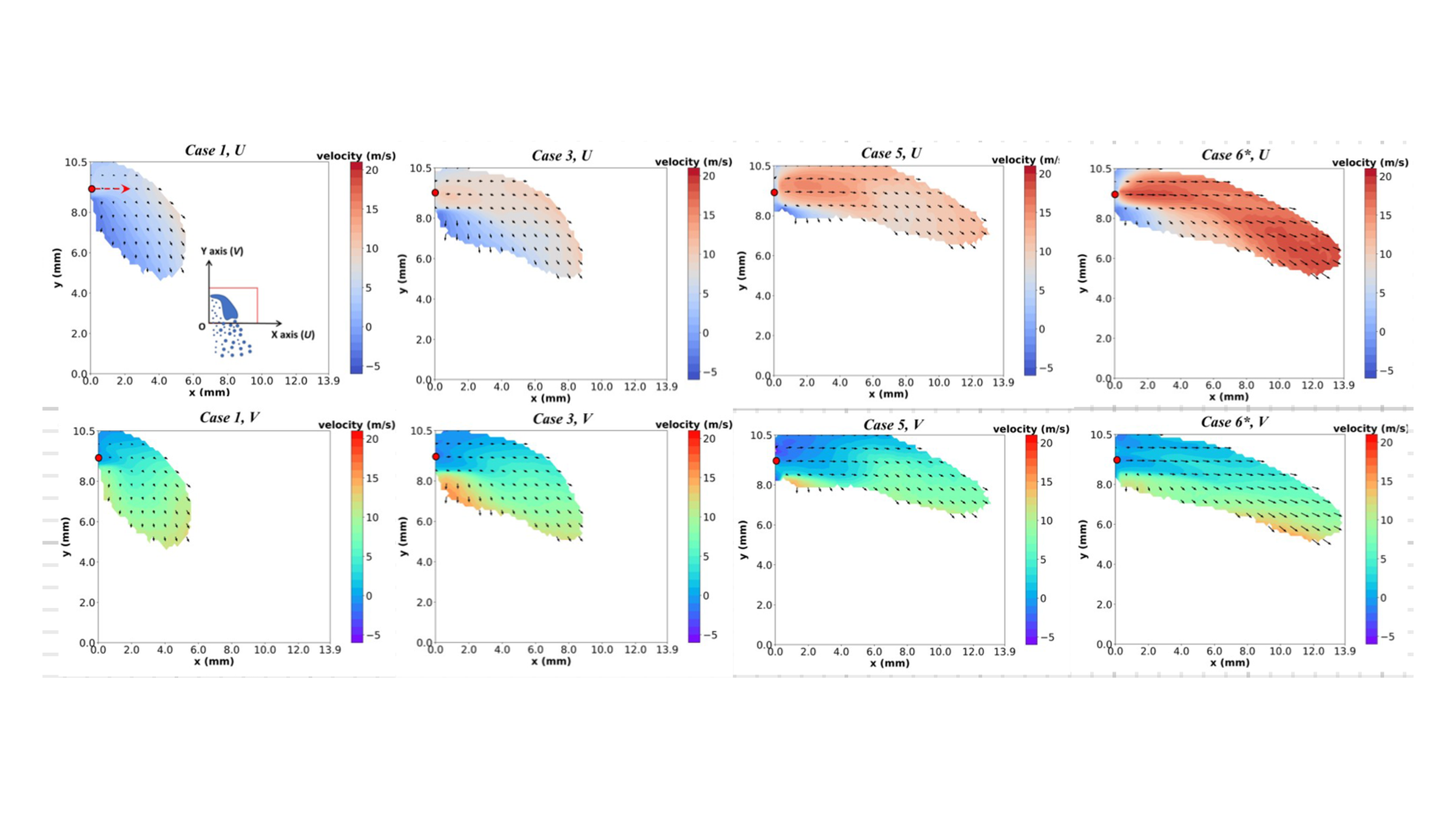
Injecting a liquid jet into a high-speed air crossflow, known as a liquid jet in crossflow (LJIC), causes the jet to break up into a cloud of fine droplets. LJIC systems have been widely used in applications such as agricultural spraying and combustion systems because the breakup length and droplet distribution can be controlled by adjusting the liquid and gas momentum ratios. Owing to these advantages, LJIC is attracting increasing interest, particularly for aircraft combustion systems. However, several key issues must be understood to fully control spray performance. First, as in most fuel-injection systems, cavitation may occur inside the nozzle before the liquid is discharged. Cavitation can lead to unpredictable jet-breakup behavior and may damage the nozzle due to bubble collapse. Direct observation of cavitation inside the nozzle is extremely difficult, and its corresponding intensity is challenging to evaluate. Therefore, it is important to develop a method that can evaluate cavitation intensity from LJIC features measured outside the nozzle. Moreover, almost all existing LJIC studies have focused on round-orifice nozzles. It is therefore of interest to investigate how LJIC breakup characteristics change when the orifice geometry is modified. In this study, we applied the OC-OFV method, which combines the Optical Connectivity (OC) and Optical Flow Velocimetry (OFV) techniques, to quantify the interfacial velocity of the LJIC. The results show that features of the measured interfacial velocity can serve as indicators of cavitation intensity inside the nozzle. Additionally, we investigated the effect of orifice geometry by comparing liquid jets issued from round and flat orifices using shadowgraphy, while near-nozzle droplet sizes were measured using planar laser-induced fluorescence (PLIF). The results demonstrate that liquid sheets from the flat orifice exhibit more pronounced bending and a different near-nozzle droplet-size distribution compared with the round-orifice case.