Experimental Characterization of SAF using Laser Diffraction
M. Di Matteo(1,2), P. Hendrick(2)
1: Dept. of Weapon Systems and Ballistics, Royal Military Academy, Belgium
2: Dept. of Aero Thermo Mechanics, Université Libre de Bruxelles, Belgium
DOI:
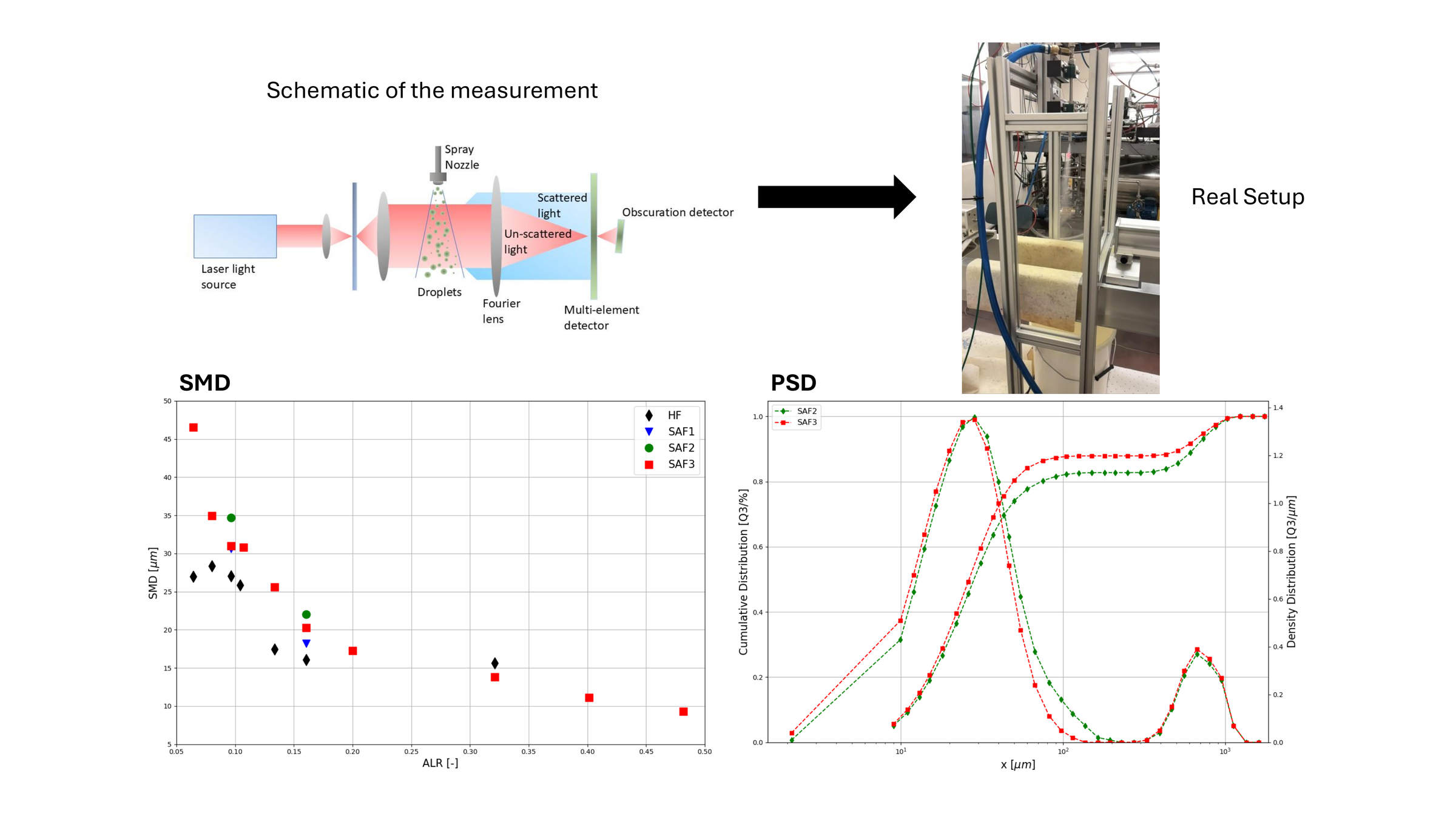
The development of Sustainable Aviation Fuels (SAF) is becoming increasingly important in efforts to reduce the environmental impact of aviation while preserving compatibility with existing propulsion systems. The droplet size distribution produced by the atomization process is one of the parameters that govern fuel combustion. The quality of atomization directly affects evaporation, mixing, and the following combustion behaviour. This work presents an experimental characterization of SAF sprays using laser diffraction under atmospheric conditions and non-reacting environment. The objects of investigation are SAF samples with different technological purity levels later compared with a domestic heating fuel. Detailed physical properties and chemical composition of the SAF cannot be disclosed due to confidentiality restrictions. The fuels are therefore identified solely by their technological purity level, and the study focuses mainly on the experimental methodology and on assessing whether purity variations influence the droplet sizes in the resulting spray. The liquid phase was atomized using an air-assisted nozzle mounted on a dedicated test bench equipped with independent air and liquid supply lines, both monitored by mass flow sensors. The system was remotely controlled through a custom LabVIEW interface, which allows systematic variation of the operating conditions. Droplet size measurements were performed using a Helos/Vario KR laser diffraction system with two optical configurations covering the ranges 0.1–175 µm and 1–1750 µm. Operating points were established by increasing the air to liquid ratio. In the present setup, the experimental results indicate that increasing the air to liquid ratio enhances the production of smaller droplets; however, influence of fuel purity on atomization behaviour was observed. These results suggest that conventional atomization systems may remain compatible with SAF, at least under the atmospheric conditions considered in this study.